









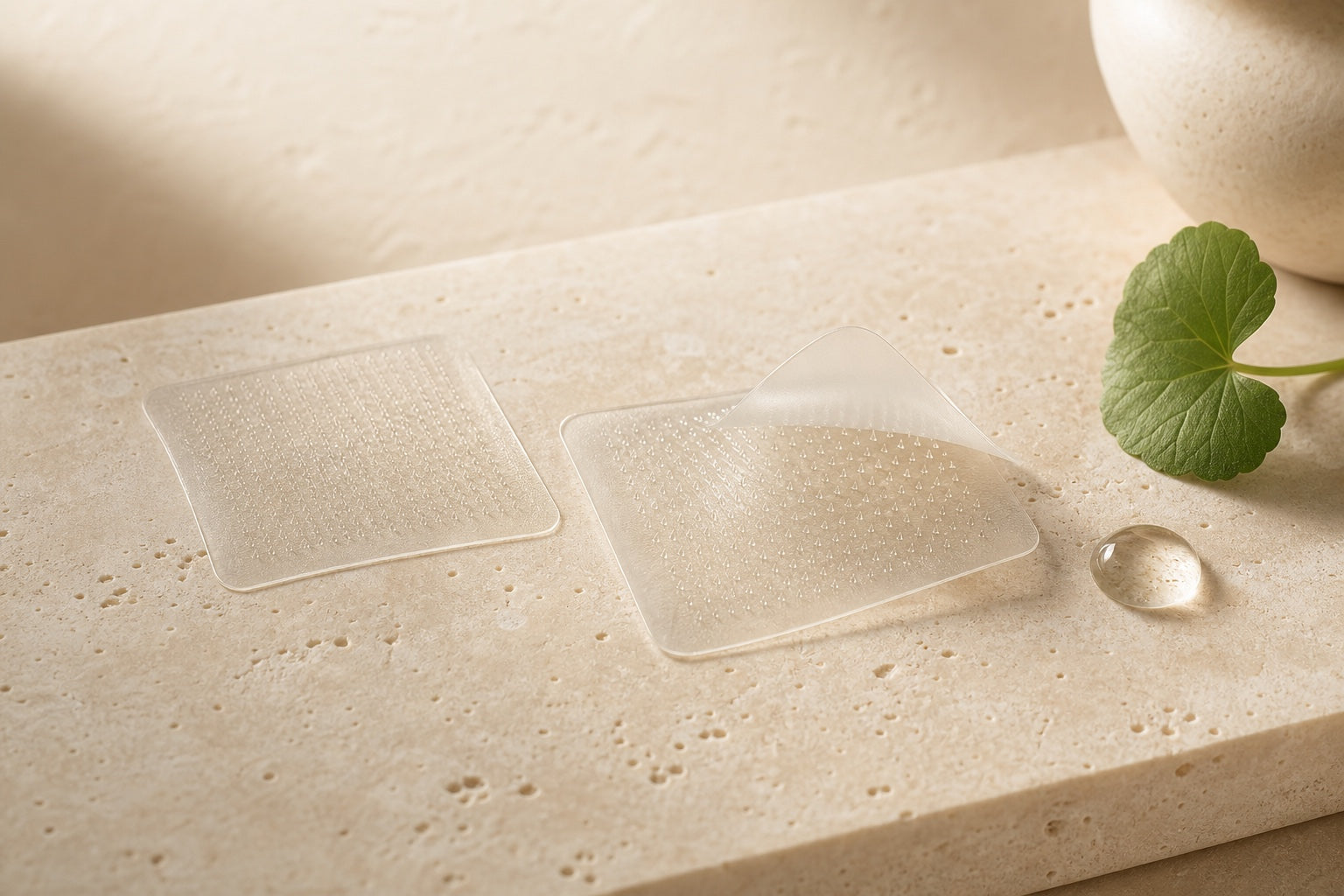
Microdart Patches, Explained: A Targeted Approach to Blemish Care
A blemish rarely appears at a convenient moment. The instinct may be to touch, squeeze or cover it with layer after layer of product—but a more considered approach begins with leaving the area alone and choosing care that stays precisely where it is needed.
Microdart patches offer a focused, hands-off way to care for an individual spot. Here is how the technology differs from a conventional blemish patch, what to expect and how it can fit into an intentional skincare ritual.
What is a microdart patch?
A microdart patch has an array of extremely small projections on its underside. Depending on the product design, these projections may be formed from a matrix that gradually softens or dissolves while the patch remains against the skin.
When applied according to the package directions, the patch creates close, targeted contact between the selected area and the material within its microdarts. The adhesive backing also keeps the area covered, helping make the ritual precise and self-contained.
Microdart patches should not be confused with professional microneedling. Professional microneedling uses specialized devices and involves different needle depths, purposes and safety considerations.
Microdart versus hydrocolloid: what is the difference?
Although both formats cover an individual blemish, they are designed differently.
A conventional hydrocolloid patch is an absorbent dressing. It is often used as a protective covering for a superficial blemish, particularly when visible fluid is present. It can also help discourage touching and picking.
A microdart patch uses tiny projections to create more focused contact with the selected area. It is often chosen for a blemish that feels as though it is developing beneath the surface or when a more targeted ritual is preferred.
Neither format is universally “better.” The most appropriate choice depends on the type and condition of the blemish, the individual patch design and the directions provided with the product.
Where does it fit in a skincare ritual?
Use a microdart patch on clean, completely dry skin. It should be applied before serum, cream or facial oil reaches the targeted area.
Your surrounding skincare routine can remain simple:
-
Cleanse the skin and dry it thoroughly.
-
Remove the patch carefully without touching the microdarts.
-
Centre it directly over the targeted area.
-
Press it into place according to the package directions.
-
Leave it on for the recommended wear time.
-
Remove it gently and dispose of it after use.
Avoid placing cream, serum or oil beneath the patch, as this may interfere with adhesion. Follow the product packaging for the recommended application time and frequency.
What should you realistically expect?
A targeted patch is not an overnight promise, and no single skincare product responds identically on every person or every blemish.
Its value lies in focus: it stays in place, creates a contained ritual and helps reduce the temptation to repeatedly touch the area. The appearance and progression of a blemish can vary according to its type, depth and the individual skin around it.
Research into dissolving microneedle patches is encouraging, but studies remain relatively small and results are specific to the designs and ingredients tested. Findings from one patch should not automatically be applied to every microdart product.
A more considered clarity ritual
Targeted care does not need to mean using every clarifying product at once.
The Ivoryloom Clarity Reset brings together three different roles:
Microdart Blemish Patch
For focused care applied directly to an individual area.
The Cashmere Clay Mask
A separate masking step for a broader clarifying and refining ritual.
Turmeric Rose Drops
A sensorial formula that can be incorporated as its own skincare step when the ritual calls for comfort and replenishment.
These products do not need to be layered simultaneously. Apply the patch only to clean, dry skin and avoid placing other skincare beneath it. Use the mask and facial drops separately according to their individual directions and the needs of your skin.
When should you seek professional guidance?
Do not apply a patch over skin that is open, actively bleeding or visibly irritated unless the product directions specifically permit it. Stop using the product if discomfort or irritation develops.
Persistent, painful, widespread or scarring blemishes deserve guidance from a qualified healthcare professional or dermatologist. A cosmetic skincare ritual is not a substitute for medical care.
The quiet advantage of targeted care
The most thoughtful response to a blemish is often not more product, but greater precision.
A microdart patch offers a contained moment of care: clean skin, one targeted step and the patience to let the ritual remain undisturbed.
Sometimes, less really is the more considered approach.
This article is provided for general educational purposes and is not medical advice. Always read and follow the product directions. Individual results and skin responses may vary.

Written by Priyanka Rao