Article: Peptides, Explained: Copper Peptides, Argireline and the Modern Skincare Ritual
Peptides, Explained: Copper Peptides, Argireline and the Modern Skincare Ritual
Peptides have become shorthand for advanced skincare. They appear in serums, creams and concentrated treatments promising a more refined, resilient-looking complexion.
But “peptide” is not one ingredient—and different peptides should not be treated as interchangeable.
Copper peptides and acetyl hexapeptide-8, commonly known by the trade name Argireline, have different structures, different formulation roles and different bodies of research behind them. Understanding those differences makes it easier to approach peptide skincare with realistic expectations.
What is a peptide?
Peptides are short chains of amino acids—the same fundamental building blocks that form larger proteins.
Their behaviour depends on far more than the word “peptide” appearing on an ingredient list. The amino-acid sequence, molecular size, chemical modifications, concentration, stability and delivery system can all influence how a peptide behaves within a cosmetic formula.
This is why two peptide products may feel—and perform—very differently.
The skin’s outermost layer is designed to act as a barrier. That makes the delivery of many topical ingredients challenging, including peptides. A thoughtfully constructed finished formula therefore matters just as much as the reputation of any single ingredient.
Why peptides are not interchangeable
Peptides used in cosmetics are often discussed in broad functional groups.
Some are studied as signal peptides. Others act as carrier or transport peptides, while another group has been investigated for influencing the appearance of expression-related lines.
These classifications can be useful, but they should not be mistaken for guaranteed outcomes on the skin. Laboratory research, ingredient research and the performance of a finished cosmetic product are not the same thing.
For the customer, the more useful questions are:
What peptide is being used?
How is it incorporated into the formula?
What other ingredients surround it?
How consistently and comfortably can the product be used?
Copper peptides: a distinctive complex
One of the best-known copper peptides is GHK-Cu, identified on cosmetic ingredient lists as Copper Tripeptide-1.
It combines a naturally occurring tripeptide called GHK with a copper ion. This distinctive complex has attracted research interest in areas involving skin-supporting and repair-related processes.
That research has made copper peptides especially compelling within modern skincare. However, findings from laboratory or medical settings cannot automatically be translated into promises about every over-the-counter serum.
Small topical human studies have produced mixed results, and the finished formulation remains important. Copper peptide should therefore be understood as one considered component within a complete formula—not as a guaranteed shortcut to structural transformation.
In a cosmetic ritual, copper peptide is best approached as an ingredient associated with the appearance of skin quality, smoothness and resilience over time.
Argireline: understanding acetyl hexapeptide-8
Argireline is the trade name commonly associated with acetyl hexapeptide-8, a synthetic six-amino-acid peptide used in cosmetic formulations.
It has been investigated primarily in relation to the appearance of expression-associated lines. This has led to frequent comparisons with injectable botulinum toxin treatments.
That comparison requires caution.
A topical cosmetic containing acetyl hexapeptide-8 is not an injectable treatment and should not be described as producing the same action or result. Reviews of the research also identify skin penetration as an important limitation, with results varying according to the formulation and delivery system.
Some studies of finished cosmetic serums containing acetyl hexapeptide-8 have reported visible improvements in wrinkles and broader measures of skin appearance. However, these formulas often contain several additional ingredients, making it difficult to credit one peptide for the entire result.
The most accurate way to view Argireline is as an intriguing cosmetic peptide whose usefulness depends on how it is formulated—and whose effects should be discussed in terms of visible skin appearance, not medical intervention.
What the research can—and cannot—tell us
Peptide research is promising, but it is not uniform.
Individual peptides have different evidence behind them. Studies may use different concentrations, delivery technologies, treatment periods and assessment methods. Some examine isolated ingredients, while others investigate complex finished formulas containing peptides alongside niacinamide, hydrators, exfoliating ingredients or botanical extracts.
A favourable result for one formula does not prove that every product using the same headline peptide will perform identically.
Research can help us understand why a peptide is interesting. It cannot replace thoughtful formulation, appropriate packaging, product stability or consistent use.
This is also why a longer ingredient list is not automatically a better one. A considered peptide formula is not about assembling the greatest number of fashionable actives. It is about giving each ingredient a clear role within the whole.
Where peptides fit into a skincare ritual
Peptide serums generally fit comfortably into the treatment stage of a routine.
A simple order may look like:
-
Cleanse.
-
Apply an ampoule or lightweight hydrating layer, if desired.
-
Apply the peptide serum.
-
Follow with a moisturizer.
-
Finish with a facial oil when additional richness is desired.
-
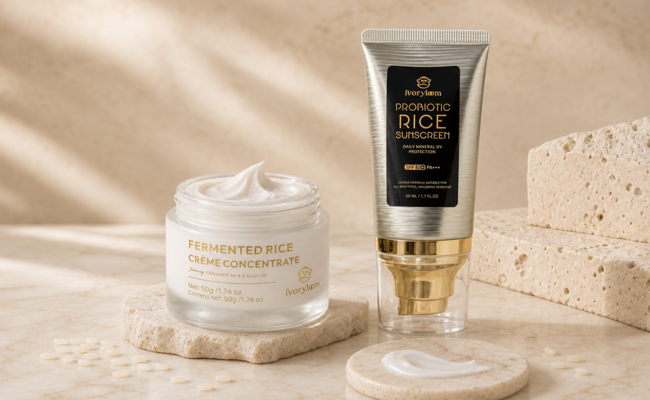
During the daytime, complete the ritual with sunscreen.
Texture should help guide the order: lighter water-based formulas usually come before richer creams and oils. Always follow the directions provided with the individual product.
There is rarely a need to introduce several concentrated treatments at once. Adding one product at a time makes it easier to understand how it feels on the skin and how it fits into the wider routine.
If irritation develops, simplify the routine and discontinue the product causing concern. Those managing a skin condition or prescription skincare regimen should seek guidance from a qualified healthcare professional.
The Peptide Potion
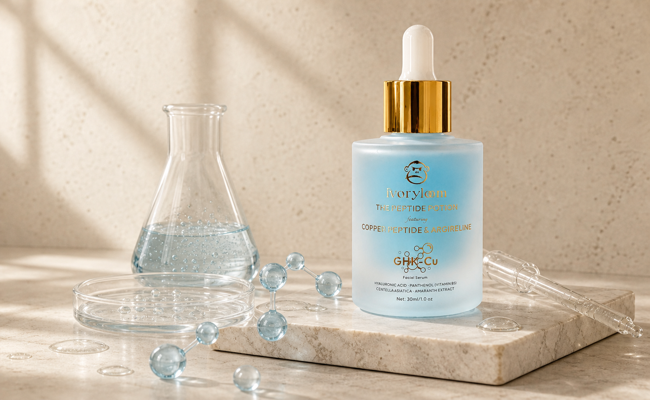
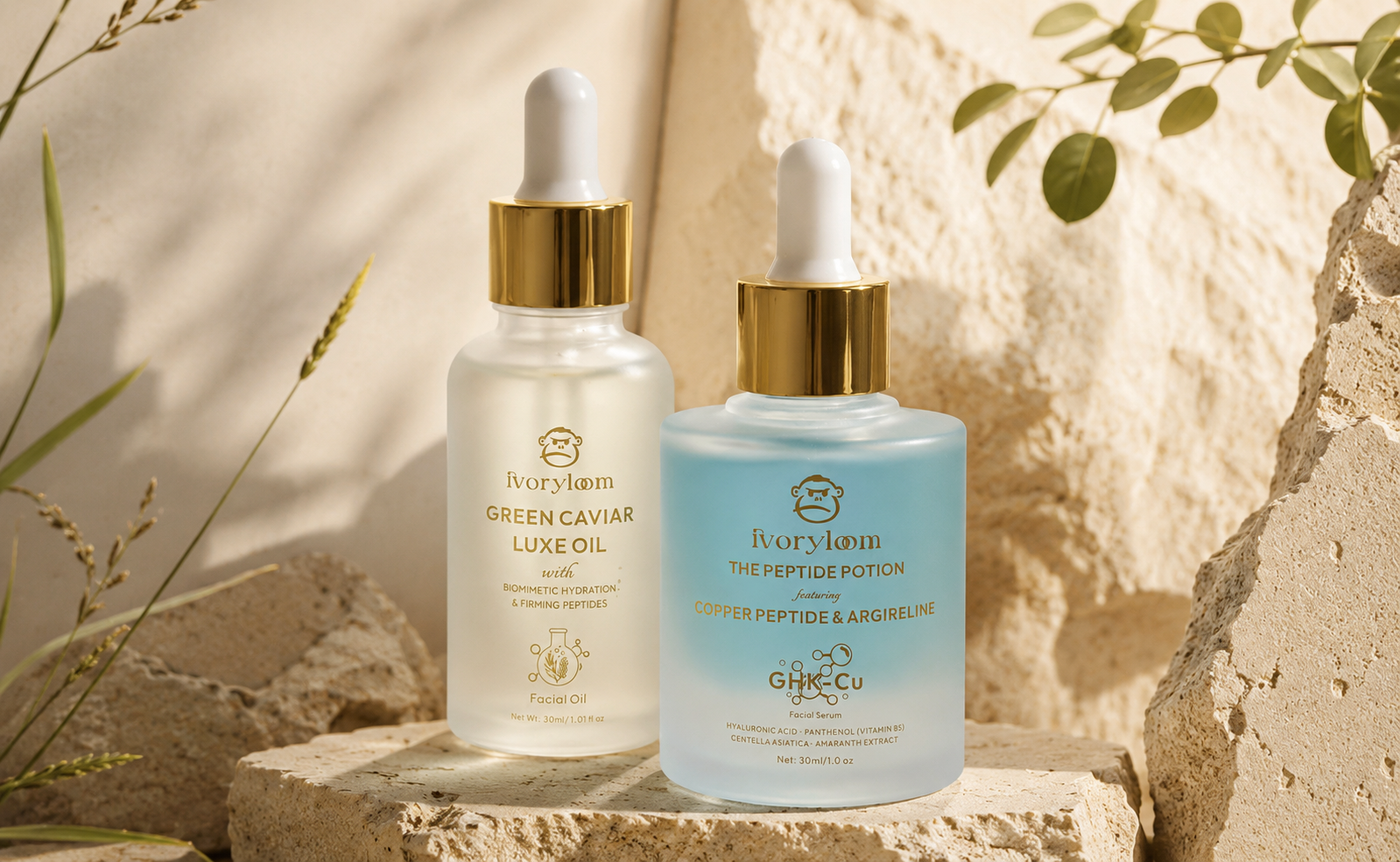
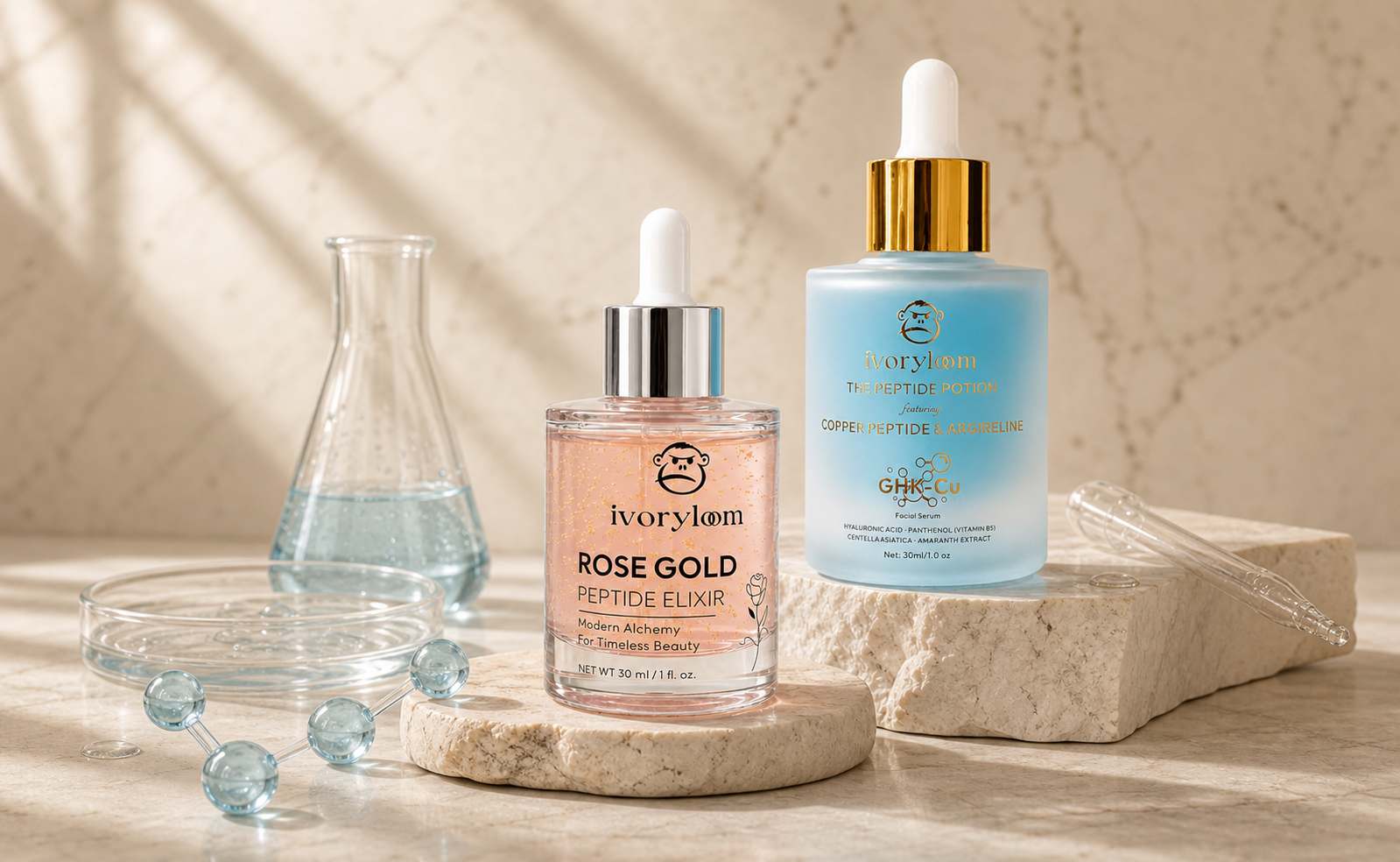
The Peptide Potion brings Copper Tripeptide-1 and acetyl hexapeptide-8 into a broader serum composition designed for a considered treatment step.
Within an Ivoryloom ritual, apply it after cleansing and lighter hydrating layers, then follow with a cream or moisturizer.
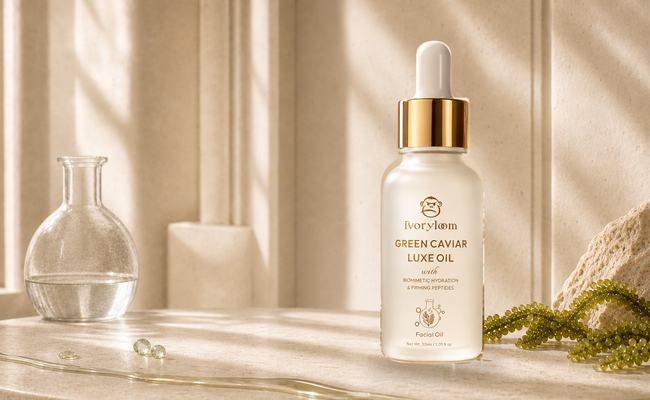
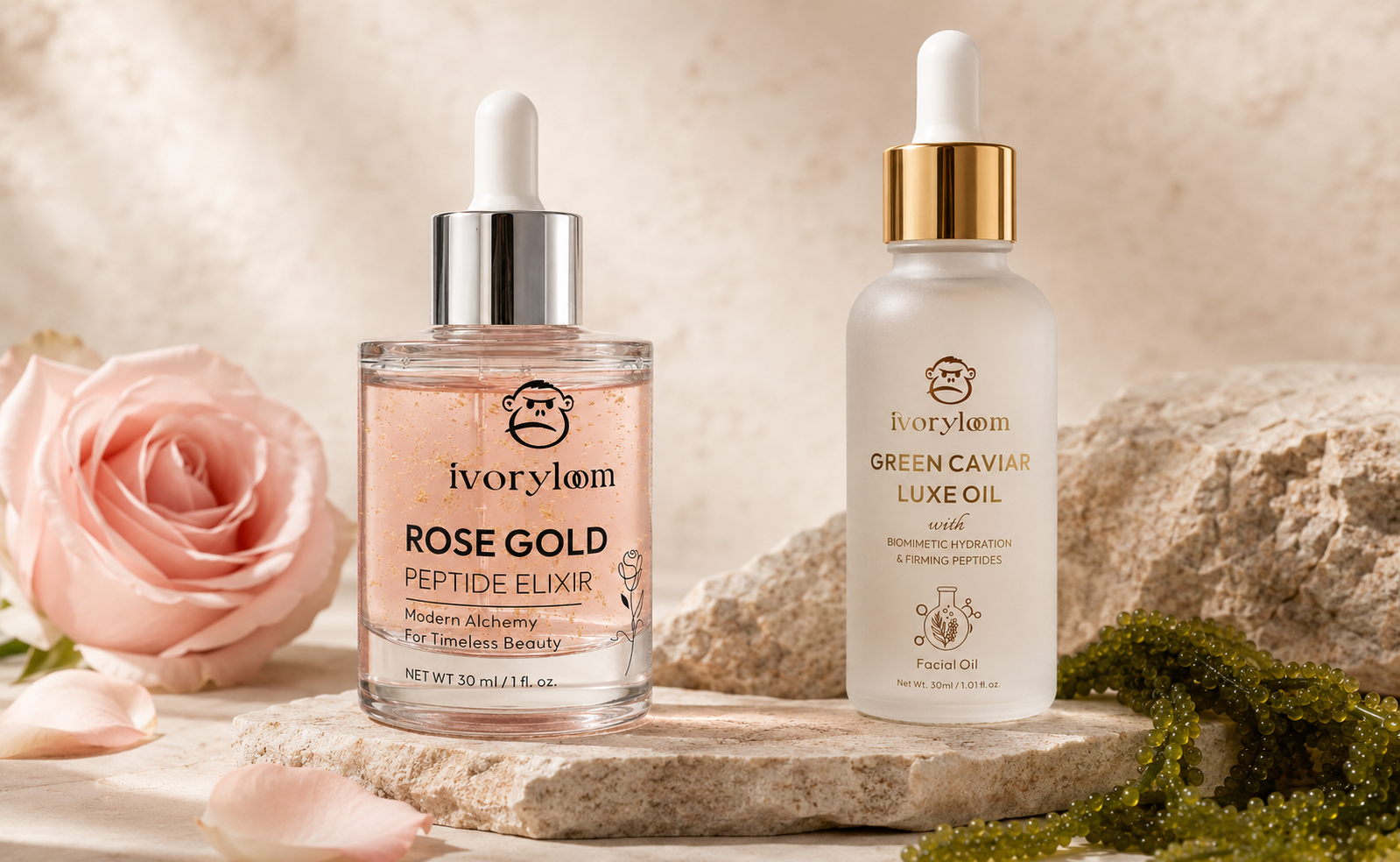
For a richer evening ritual, The Peptide Potion may be followed by Green Caviar Luxe Face Oil. This is a sensorial layering choice: the serum provides the concentrated treatment step, while the oil completes the ritual with a more enveloping finish.
The pairing should not be interpreted as requiring every product at once. Skincare is personal, and the most effective ritual is often the one that remains comfortable, consistent and easy to return to.
What to expect from peptide skincare
Peptide skincare is best approached without spectacle.
It should not be expected to reproduce the effects of an injectable treatment, transform the skin overnight or compensate for an uncomfortable, poorly balanced routine.
Instead, look for a formula that:
-
feels comfortable enough for consistent use;
-
layers well with the rest of the ritual;
-
supports a smoother, more supple and refined-looking complexion;
-
is presented with clear directions and realistic cosmetic claims.
Visible skincare results are shaped by the entire routine, including cleansing, hydration, moisturization, sun protection and consistency.
Precision without excess
The appeal of peptides lies in their specificity. Small differences in sequence and structure can give each peptide a distinctive formulation story.
Copper peptides and Argireline illustrate that diversity particularly well. One is a copper-binding tripeptide complex; the other is a synthetic hexapeptide investigated in relation to the appearance of expression lines.
Neither should be reduced to a miracle claim.
At Ivoryloom, peptides belong within a broader philosophy: distinctive ingredients, thoughtful pairings and formulas considered as a whole.
Because intelligent skincare is not about chasing the loudest promise. It is about understanding what belongs—and creating a ritual with intention.
This article is provided for general cosmetic education and does not constitute medical advice. Always follow product directions, review ingredient lists and consult a qualified healthcare professional regarding individual skin conditions or concerns.

Written by Priyanka Rao