Article: Fermented Rice in Skincare: What Makes Fermentation Different?
Fermented Rice in Skincare: What Makes Fermentation Different?
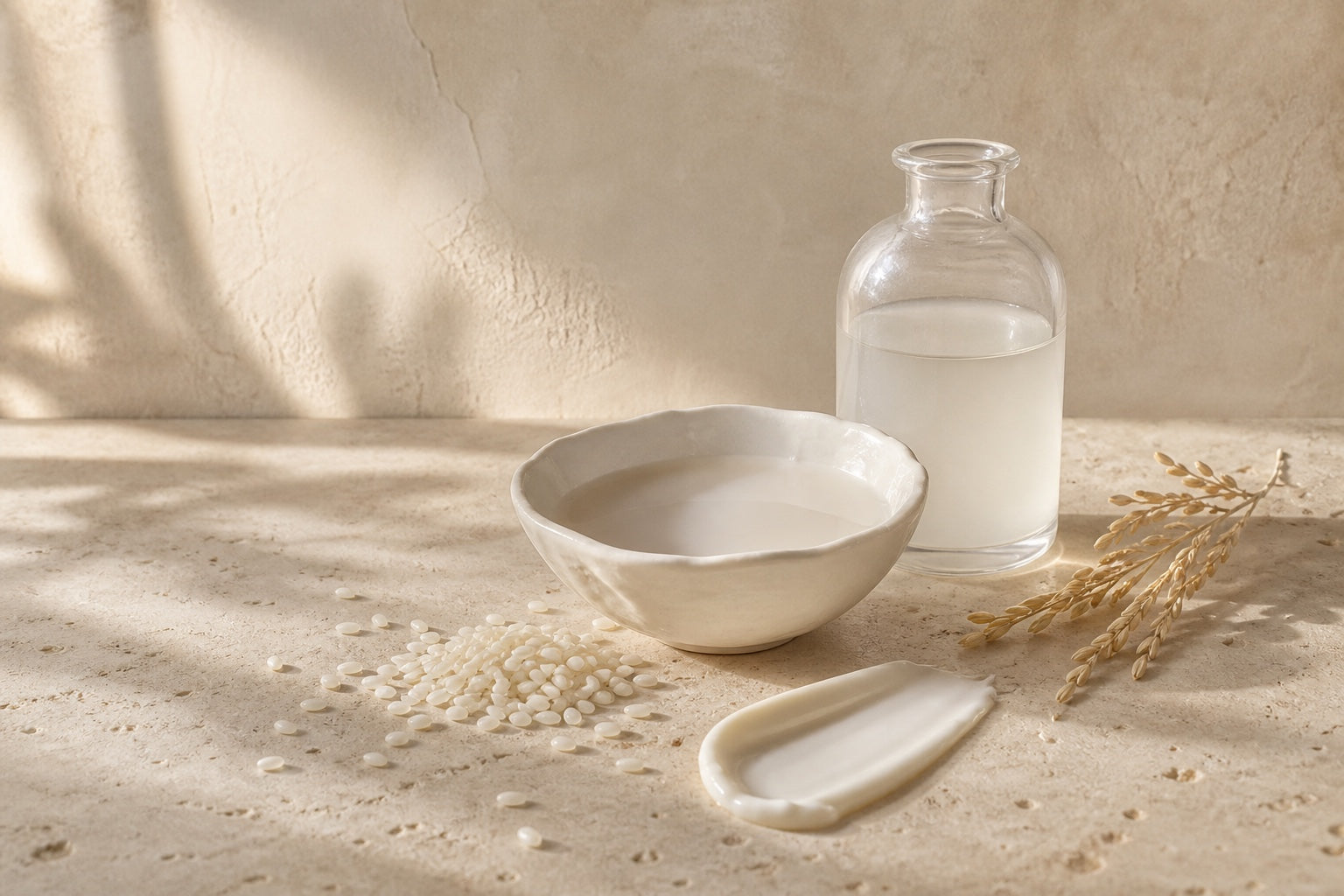
Rice has occupied a place in beauty rituals for generations. Fermentation adds another dimension - transforming a familiar grain through a controlled biological process and creating an ingredient profile distinct from untreated rice.
But “fermented” is not a promise by itself. The microorganism used, the part of the rice selected, the process, concentration and finished formulation all influence what the ingredient ultimately becomes.
So what makes fermented rice different - and why does it continue to intrigue modern skincare formulators?
What does fermentation mean?
Fermentation uses microorganisms, such as selected yeasts or fungi, and their enzymes to transform a starting material.
During this process, larger components may be broken into smaller ones while new metabolites can be produced. The resulting ferment can therefore have a different chemical profile, texture and sensorial character from the original rice material.
There is no single universal “fermented rice ingredient.” Rice grain, rice bran and rice-derived liquids can be fermented using different organisms and processes. Two ingredients carrying similar names may consequently be quite different.
How is fermented rice different from ordinary rice extract?
An untreated extract draws naturally occurring compounds from rice without the same microbial transformation.
Fermentation can change the proportions and availability of some components within the starting material. Researchers studying particular fermented rice preparations have reported changes involving amino acids, sugars, organic acids, phenolic compounds and other metabolites.
That does not mean every fermented ingredient is automatically stronger, gentler or more effective. It means the ingredient has been transformed - and that the quality of the process and the design of the finished formula matter.
Is fermented rice a probiotic?
Not necessarily.
The language surrounding ferments, probiotics, prebiotics and postbiotics can become confusing. A cosmetic ferment may be filtered, heat-treated or otherwise processed during manufacturing. It may contain fermentation-derived compounds without containing live microorganisms.
The product’s ingredient list and supplier documentation - not the word “fermented” alone, determine what is actually present.
What does the research suggest?
Rice and rice-derived ingredients have attracted scientific interest for their potential use in skincare. Laboratory studies of specific fermented rice preparations have investigated antioxidant activity, moisture-related markers, skin-barrier-associated proteins and extracellular-matrix activity.
These findings are interesting, but they require context. Much of the research is performed in cells, reconstructed skin models or animals rather than through large human clinical trials. Results from one fermented rice extract also cannot automatically be applied to a different ingredient or finished product.
For customers, the most meaningful question is not simply whether a product contains fermented rice. It is how that ingredient has been incorporated into the entire formulation.
Why the whole formula matters
A beautiful skincare formula is more than its headline ingredient.
The fermented rice component sits within a wider composition of emollients, humectants, barrier-supportive ingredients, texture modifiers and preservatives. Each affects how the product spreads, layers, absorbs and leaves the skin feeling.
Concentration also matters. So do packaging, stability, manufacturing and the way the product is used within a routine.
This is why ivoryloom approaches fermented rice as part of a formulation story, not as a shortcut to an exaggerated promise.
The ivoryloom fermented rice ritual
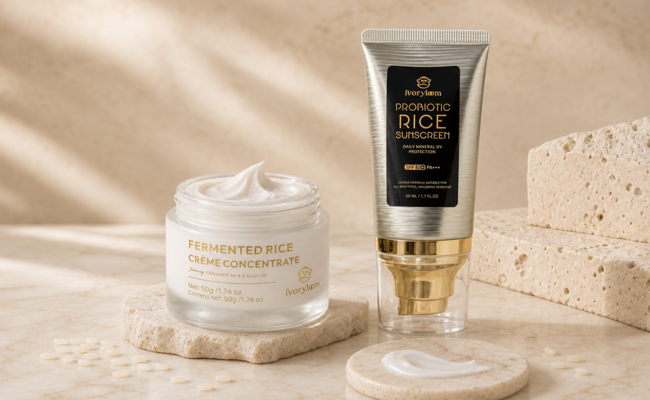
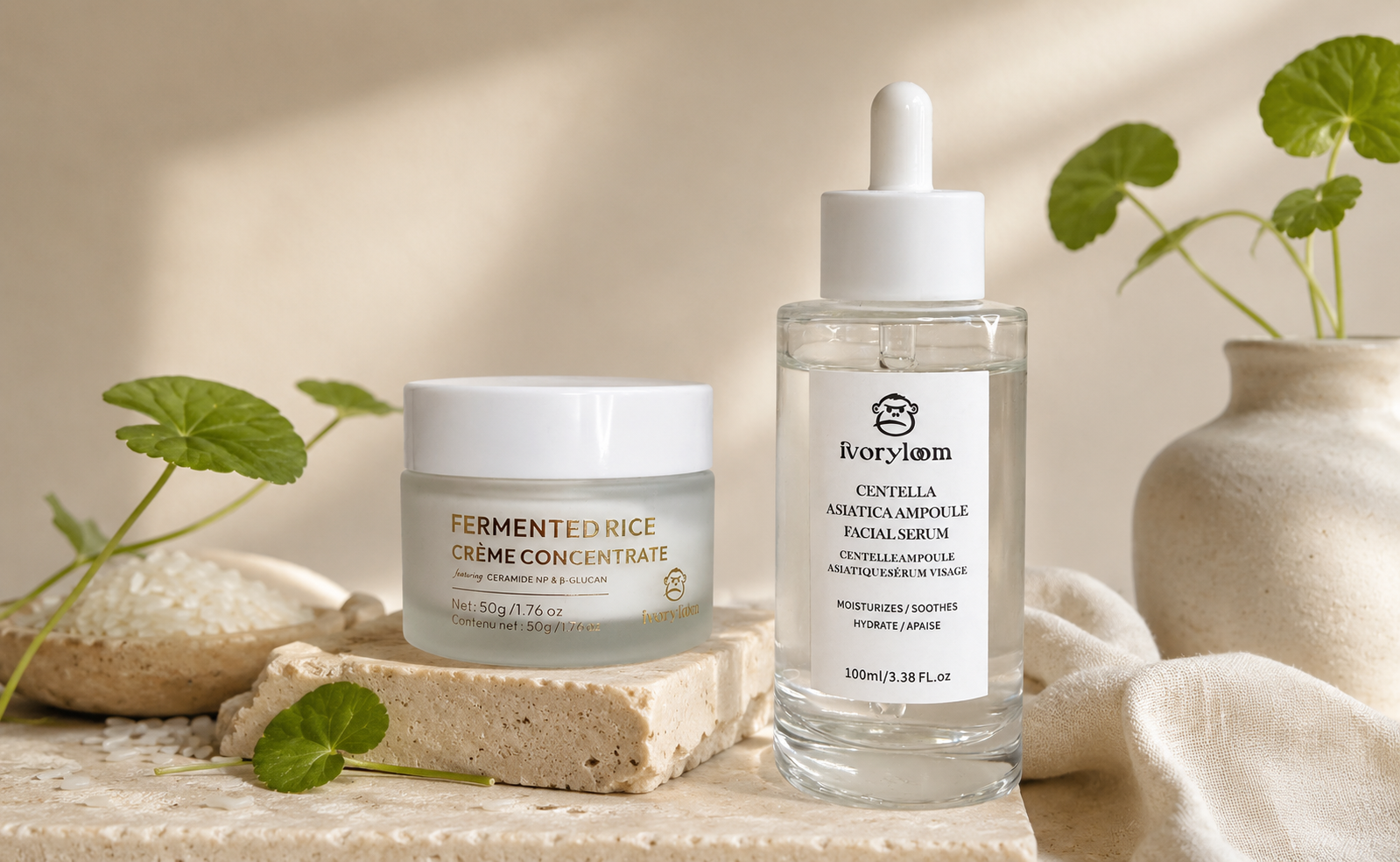
Fermented Rice Crème Concentrate was created as a replenishing moisturizing step: a sensorial crème intended to bring cushion and comfort to the ritual.
After cleansing, apply any lightweight ampoules or serums first. Follow with the crème, using the amount and frequency recommended on the product packaging.
During the daytime, complete the routine with sunscreen. In an evening ritual, a facial oil may be applied afterward when a richer finishing layer is desired.
The crème can also sit within a simpler ritual:
-
Cleanse gently.
-
Apply a lightweight serum or ampoule if desired.
-
Follow with Fermented Rice Crème Concentrate.
-
Finish with sunscreen during the day.
A routine does not need many layers to feel considered.
Who may enjoy fermented-rice skincare?
A fermented-rice crème may appeal to someone looking for:
-
a replenishing moisturizing step;
-
a richer, more comforting texture;
-
a formula inspired by fermentation and botanical heritage;
-
or a sensorial product that turns moisturizing into a more deliberate ritual.
Skin responses remain personal. Review the complete ingredient list if you have known sensitivities, introduce new products gradually and patch test when appropriate.
Fermentation as transformation
What makes fermentation compelling is not novelty alone. It is transformation—the idea that a familiar ingredient can develop a different identity through time, process and careful formulation.
For ivoryloom, fermented rice represents the meeting of heritage and modern curiosity: an ingredient with a long beauty association, reconsidered within a contemporary skincare ritual.
The result is not about celebrating one ingredient in isolation. It is about what that ingredient can become when every part of the formula is considered as a whole.
This article is provided for general educational purposes and is not medical advice. Individual products, ingredients and skin responses vary. Always review and follow the directions supplied with the product.

Written by Priyanka Rao